 Vet attendance courses
 Vet Nurse attendance courses
 Vet Support Staff courses
 All attendance courses
 Certificate Programmes
 Academies
 On-Demand
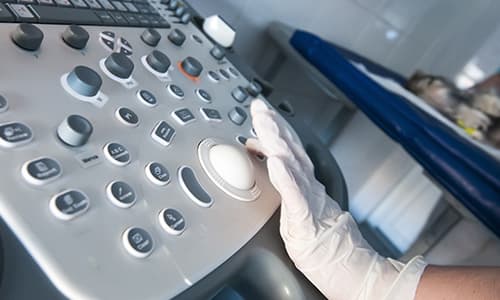
This practical one-day course with Tom Reekie will help you develop confidence using point-of-care ultrasound (POCUS) to rapidly assess and triage emergency patients in veterinary practice.
£629.00 + VAT (Non-Member price)
£314.50 +VAT (Member price)
Find out more about our Membership plansSpecial Offer
Central CPD Membership
Free theory courses, 50% off standard practical courses and unlimited online CPD for one exceptional price
Find out more-
Description
Rapid assessment is critical when managing emergency and critical care cases. This highly practical course is designed to help you integrate focused ultrasound techniques into the initial evaluation of unstable patients, allowing you to identify life-threatening conditions quickly and support clinical decision-making.
Through a combination of short lectures and hands-on scanning sessions, you will learn how focused ultrasound examinations can be used to assess the thorax and abdomen in emergency presentations. The course introduces key FAST scanning techniques and demonstrates how ultrasound findings can help guide treatment and stabilisation in critically ill patients.
The course is suitable for veterinary surgeons new to POCUS as well as veterinary nurses who wish to develop practical ultrasound skills for patient triage.
Practical sessions will allow you to develop confidence in probe handling, image recognition and systematic scanning approaches so you can apply these techniques in real emergency situations in practice.
Topics to be covered
- Principles of point-of-care ultrasound (POCUS)
- FAST scanning techniques: AFAST™ and TFAST™
- Ultrasound assessment of the emergency abdomen
- Rapid evaluation of dyspnoeic patients
- Identification of free fluid, haemorrhage and pleural effusion
- Recognition of pneumothorax and pulmonary oedema
- Using ultrasound findings to support emergency triage and case management
Related courses
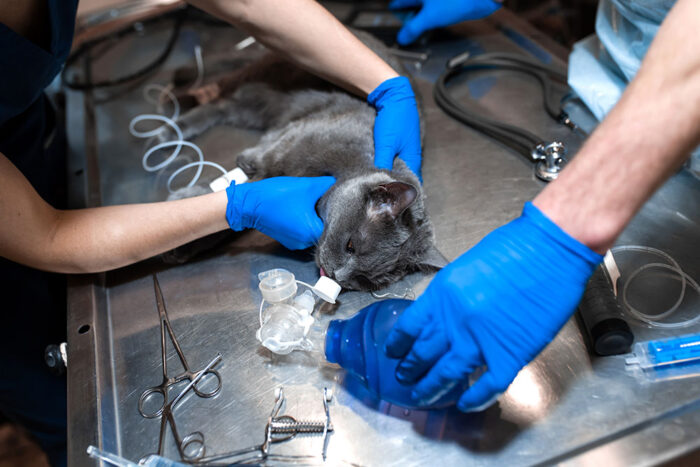
RECOVER CPR BLS and ALS Certification (Swindon)

Practical Feline Dentistry (2 day course - Swindon)
Practical Local Anaesthesia One-Day Fast-Track (Sheffield)